
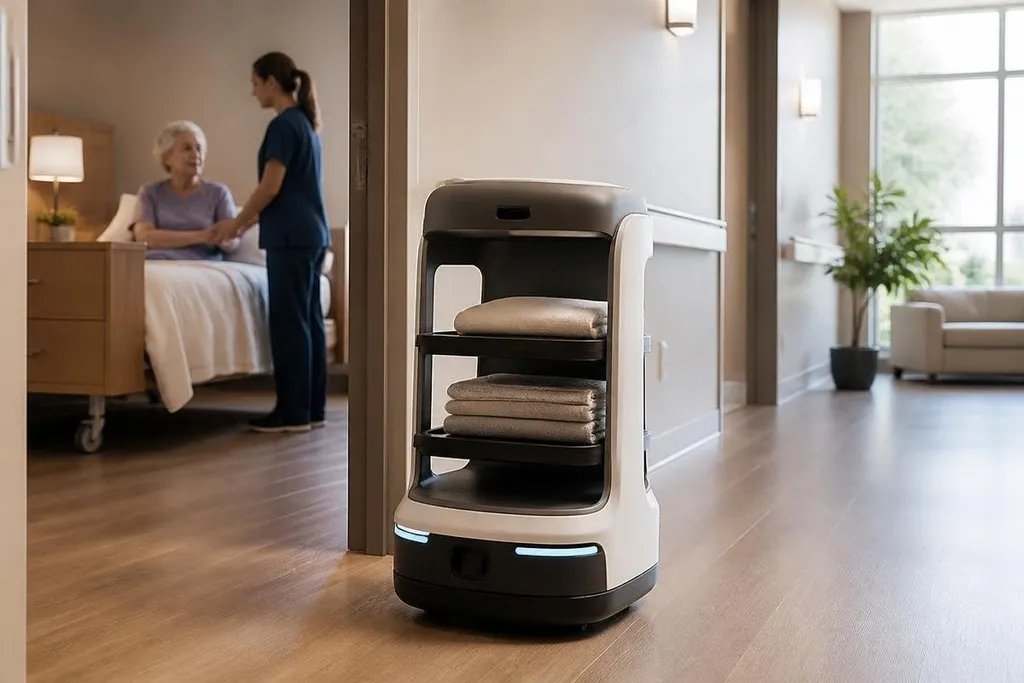
A caregiving robot does not need to look human to become a business. A system that moves supplies, checks rooms, or helps a person stand can create value through a narrow paid service.
For a care provider, the buying question is practical: which task happens often enough, costs enough, and can be done safely by a machine?
- Room checks can use cameras, LiDAR, or sound sensors to spot events that need a human response.
- Delivery robots can move meals, laundry, or medicine between fixed points.
- Lift-assist systems can help with transfers while a trained worker stays in control.
Start with work that repeats
Care facilities run on repeated tasks. Staff move supplies, answer call buttons, check rooms, guide people through hallways, and record changes in condition. The business case improves when the task has a clear start, finish, route, and handoff.
That points toward service robots before general-purpose home machines. A delivery robot can use a mapped route and a docking station. A mobile manipulator, which combines a moving base with an arm, needs more sensing and control because people and objects may shift during the task.
The buyer still needs a clear measure. A vendor might price delivery by room, shift, or month. A monitoring system might charge by room covered and the number of alerts handled by staff. These models connect the robot to a task instead of selling a machine with a long list of features.
Four places revenue could start
Internal delivery is the first opportunity. A robot can move meals, linen, waste, or sealed medicine containers across a building. The value comes from fewer routine trips for care staff, though the robot still needs safe doors, lifts, charging points, and a person who handles exceptions.
The second is room monitoring. Cameras, microphones, pressure sensors, and wearable devices can detect a fall or a long period without movement. Privacy rules, consent, storage, and false alarms matter as much as the sensor. A system that sends ten poor alerts each shift can add work instead of removing it.
The third is physical assistance. A transfer robot or powered support device could help a person move from a bed to a chair. This area needs force limits, emergency stops, fit checks, and trained staff. The business case depends on safe operation during real transfers, not a controlled demonstration.
The fourth is home support. A robot might remind someone about a task, carry a small item, or connect them with a remote caregiver. Homes vary more than care facilities, so setup, repair, and remote help become part of the service price.
The buyer is paying for the whole service
A care provider will need more than hardware. The package may include installation, mapping, software updates, staff training, cleaning, battery replacement, and a response plan for failures.
The cost model needs evidence beside each line, especially staff time and support after launch. A care provider can use Robot24.com to compare named caregiving robots with company plans and reported trial results before setting a pilot budget.
The open question is proof. Without a supplied deployment record, measured task time, safety review, or price, no one can say which caregiving robot model will earn money first. The strongest proposals will show the task, the human handoff, the failure rate, and the cost per completed job.
A buying checklist
Use these checks before funding a pilot:
- Name the task: Write down the exact action, route, and handoff the robot must complete.
- Count the work: Measure how often staff perform it during a normal shift.
- Set the safety boundary: List where a person must take control and how the robot stops.
- Price the service: Include setup, training, repairs, power, software, and staff time.
- Test the exceptions: Try blocked routes, missed calls, low batteries, and confused users.
- Choose one measure: Track completed tasks, response time, staff minutes, or another clear result.
I'd put the first serious caregiving robot revenue in fixed care sites, where routes, staff roles, and safety checks can be controlled. Home robots may reach more people, but every home adds a new floor plan, network, user need, and repair problem.
The next useful proof will be a paid trial that reports one task, one price, and one measured result. Until then, buyers should fund a narrow service rather than a machine that promises to do everything.